Corporal William Christian Arnold
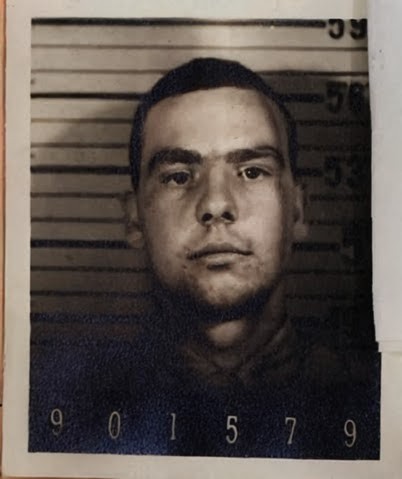
- Unit: 1st Marine Division, 1st Marines, 2nd Battalion, Company F
- Date of Birth: July 18, 1925
- Entered the Military: September 30, 1943
- Date of Death: February 6, 2005
- Hometown: Brooklyn, New York
- Place of Death: Queens, New York
- Award(s): Purple Heart
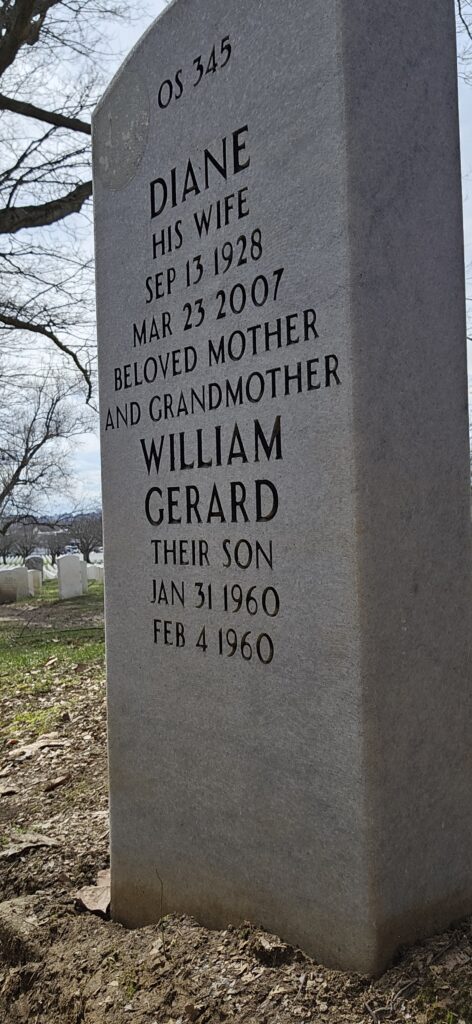
- Cemetery: Section OS, Grave 345. Cypress Hills National Cemetery, Brooklyn, New York
Mentored by Mr. Bryan Melnick
Simon Baruch MS104, New York, New York
2025/2026
Early Life
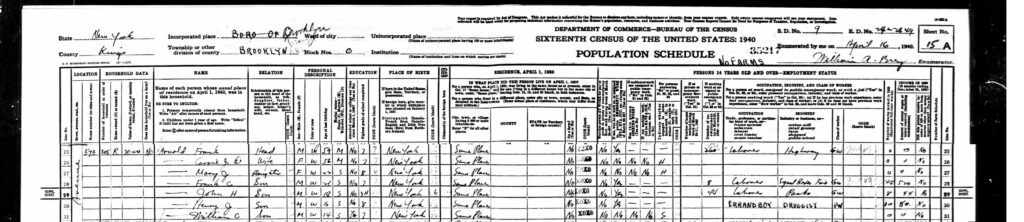
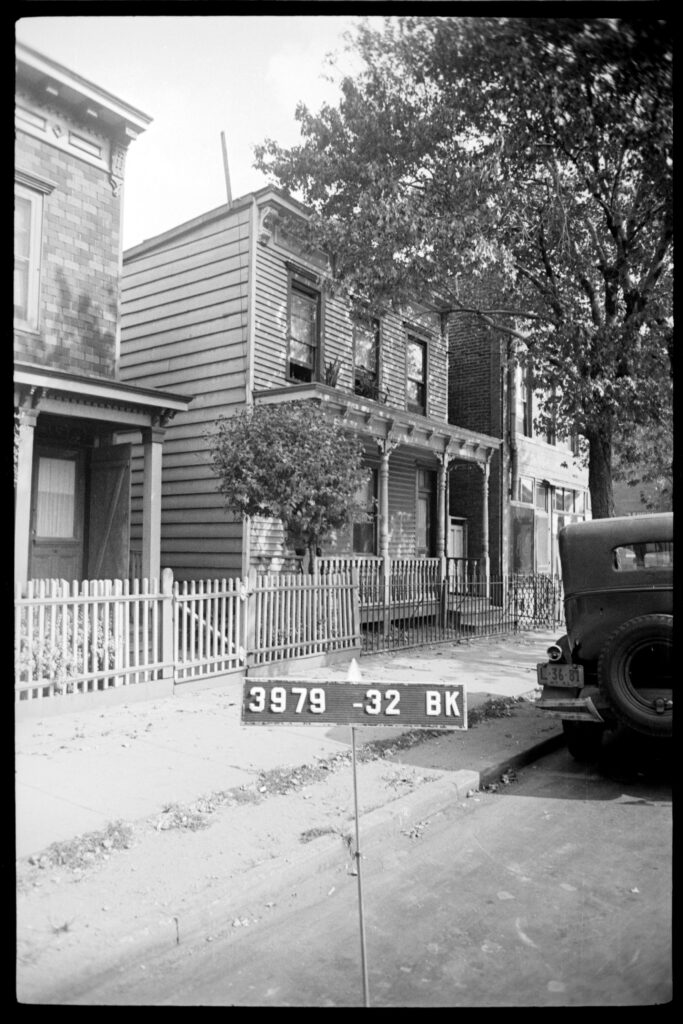
William C. Arnold was born on July 18, 1925, in Brooklyn, New York, to Frank and Carrie Arnold. Frank Arnold, whose original last name was Caccavale, was an Italian immigrant. Carrie Arnold, whose maiden name was Rupp, was a first-generation American whose parents were from Germany.
Arnold grew up with his three brothers, Henry, John, and Frank Jr., and one sister, Mary. In addition to his siblings, he also had four step-siblings: Emma, Bertha, Ella, and James.
William Arnold attended Thomas Jefferson High School in the East New York neighborhood of Brooklyn for two and a half years. At the age of 16, he went to work as a compound sifter operator at the Ideal Rubber Company in Brooklyn, New York. He worked there until he enlisted in the United States Marine Corps.
Homefront
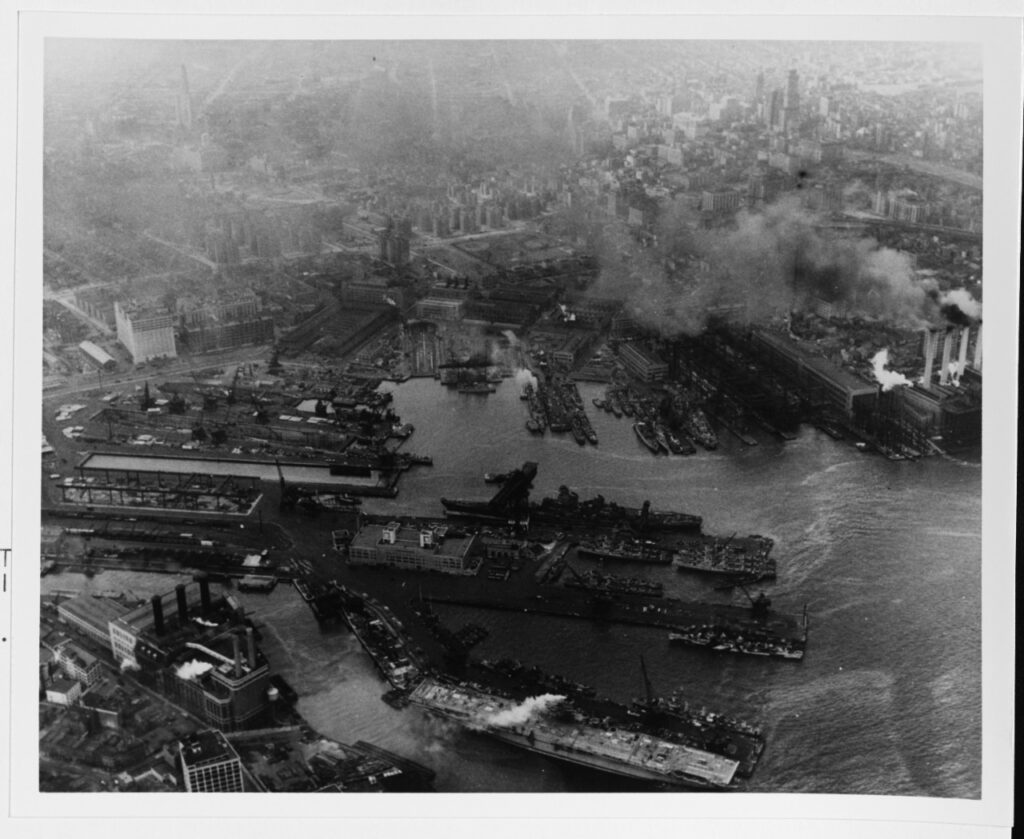
Shortly after the United States entered World War II, communities across the country took action to support the war effort. In Brooklyn, citizens began rationing their supplies. Children collected scrap metal, paper, and even leftover cooking fats to create explosives. Others established victory gardens to increase food and agricultural production. New York City was home to a vast number of wartime manufacturers — among them the Brooklyn Navy Yard, Todd Shipyards, and Carl L. Norden Inc. These manufacturers played a pivotal role in the production of warships, weapons, and precision military equipment.
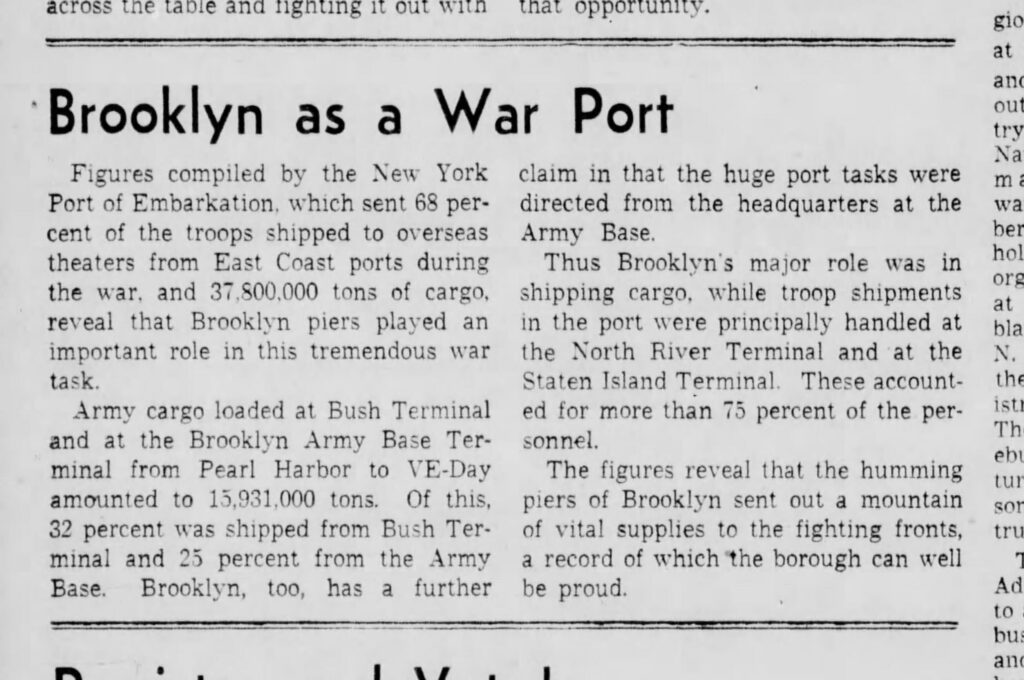
Central to Brooklyn’s wartime role was the Brooklyn Army Terminal, a massive waterfront complex in Sunset Park, originally built to supply American forces during World War I. While the terminal was completed too late to affect that conflict, it was indispensable to World War II. It was the largest military supply base in the United States and the headquarters of the New York Port of Embarkation, employing over 20,000 military and civilian personnel. Some 37 million tons of war supplies were shipped through this terminal, and more than three million American soldiers departed from its piers.
The government created propaganda and advertisements to persuade young men, such as William Christian Arnold, to join the military. New Yorkers encountered advertisements everywhere in public spaces, such as post offices, street corners, and parks.
William Christian Arnold, inspired by these advertisements, voluntarily enlisted. Family lore holds that he enlisted in the Marines to distinguish himself from his older brothers, both of whom had joined the Army. The family joked at the irony of a young man joining the Marines when he didn’t even know how to swim. He made his way to a recruitment office in 1943.

Military Experience
Replacements
William Arnold enlisted in the U.S. Marine Corps Reserve on September 30, 1943, in New York City. After Arnold’s enlistment, he was sent shortly thereafter to Parris Island, South Carolina. It was there that he trained to become a United States Marine.
On December 27, 1943, Arnold was assigned to the 39th Replacement Battalion, and on January 23, 1944, to the 43rd Replacement Battalion. He was subsequently transported to San Diego, California, and on April 8, 1944, Arnold departed the United States aboard SS Mormachawk, bound for war in Noumea, New Caledonia. He joined the ranks of Company F, 2nd Battalion, 1st Marines, 1st Marine Division, Fleet Marine Force at Pavuvu Island on May 23, 1944, where the division was in the middle of a five-month refitting following the Cape Gloucester campaign.
Private Arnold was a replacement who would serve in the Pacific under the command of Colonel Lewis ‘Chesty’ Puller. The units under his leadership would earn a reputation for being hard-nosed and determined. Entering a regiment as a replacement was often isolating and cold; joining a regiment of men, a family, who had, by then, been together through over 18 months of combat. Arnold missed the legendary combat on Guadalcanal and Cape Gloucester. That meant a replacement had to earn their place and prove themselves.
Peleliu Beach
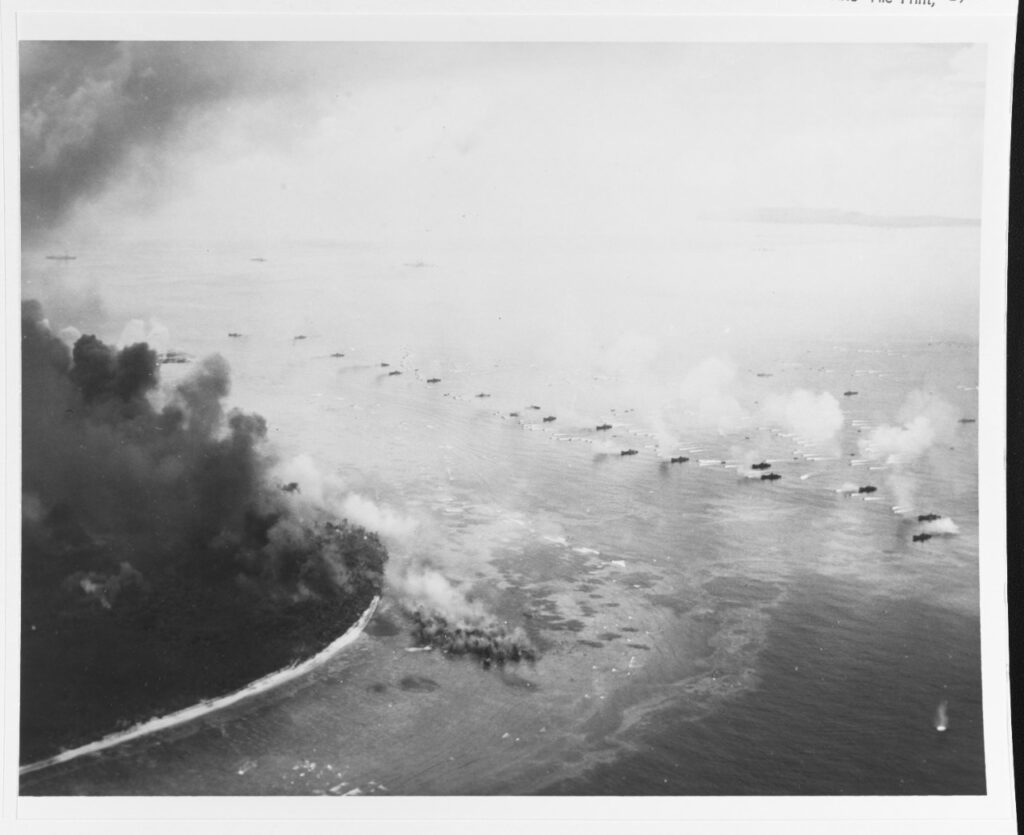
On August 26, 1944, Arnold’s unit departed Pavuvu, stopping briefly at Guadalcanal before sailing for Peleliu. The 2nd Battalion landed on Beach White-2 on September 15, 1944, or D-Day for this operation. Arnold served as an automatic rifleman, providing suppressive fire in support of the squad’s advance. Arnold was wounded in action on September 16, 1944, and evacuated. The battle for Peleliu lasted until November 27, 1944, and Arnold’s regiment suffered heavy losses during this battle.
Purple Heart
Arnold was awarded the Purple Heart while hospitalized following a mortar attack. He sustained injuries to his right knee. Records show his hospital treatment was initially brief. He was treated for physical wounds before being sent back to Fox Company. On November 3, 1944, Arnold was promoted to private first class.
On February 2, 1945, the 1st Marines departed Pavuvu. They staged through the Ulithi Atoll and landed at Okinawa on April 1, 1945. Allied commanders chose Okinawa for their next and last campaign. Top officials prepared for the eventual invasion of Japan. The fighting on Okinawa was considered the last and bloodiest battle of the war. The battle lasted almost three months, from April 1 to June 22, 1945.
Okinawa
Private First Class Arnold fell back into line and fought with his unit through the first five weeks of action. Their goal was to breach the Shuri defensive line. During this action, Arnold sustained shrapnel wounds to his face and was evacuated by air to a U.S. Naval Hospital on June 5, 1945.
Shell Shocked
Arnold was transferred to Marine Barracks, Naval Dry Dock, Hunter’s Point, California, on July 1, 1945. He was initially admitted for exhaustion, also known as ‘Combat Fatigue.’ His doctors noted he experienced insomnia, anxiety, and a sensitivity to loud noises. He was ultimately diagnosed with Shell Shock. Hospital records show he was diagnosed with “a combat-induced psychoneurotic pattern of reaction,” which made him officially “unfit for combat.”
On October 27, 1945, Arnold was transferred to the Separation Company, Marine Barracks, Naval Training Center, Bainbridge, Maryland. The next day, he was promoted to corporal, and on October 29, 1945, he was honorably discharged.


Veteran Experience
After Arnold left the military, he worked as a “helper” for a household moving company. Throughout his life, Arnold openly struggled with Shell Shock, now known as Post-Traumatic Stress Disorder.
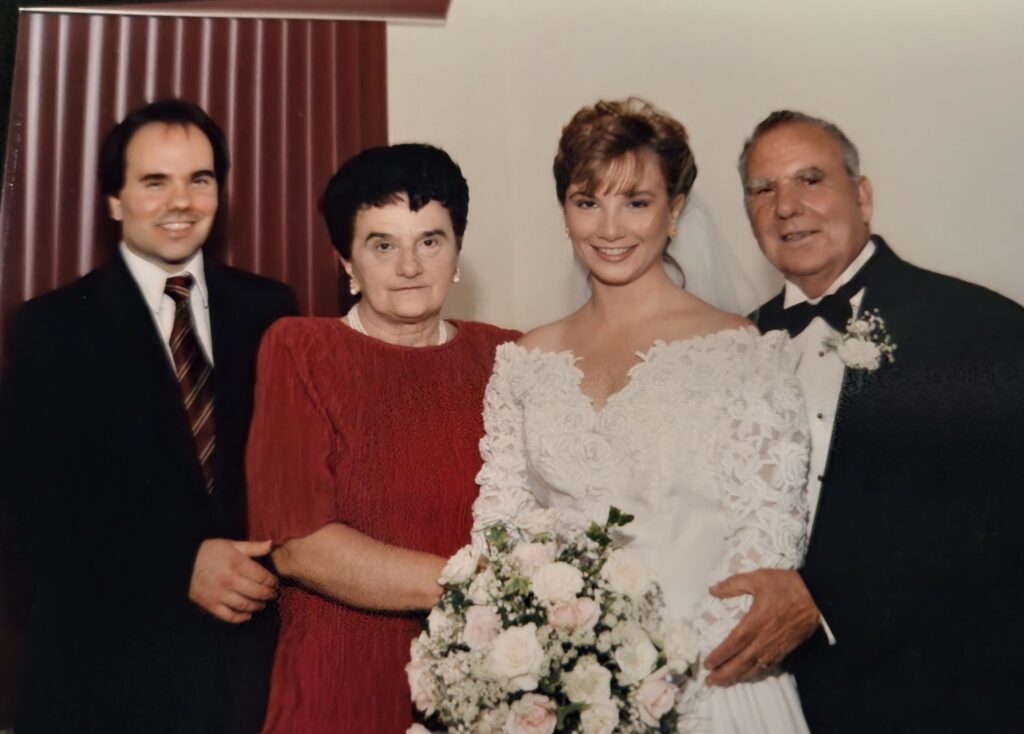
On January 17, 1951, Arnold married Diane R. Arnold, formerly Diane R. Bernhard. While Arnold was raised Lutheran, he converted to Catholicism to marry Diane. In January 1960, Diane gave birth to William Gerard, who passed away as an infant. They had two more children, Geraldine, born in 1963, and Robert, born in 1966. They made their home in the Woodhaven neighborhood of Queens.



Commemoration
William Christian Arnold died on February 6, 2005. He is buried at Cypress Hills National Veterans Cemetery.
Diane survived her husband and continued to fawn over their two grandsons. Diane died on September 13, 2007, at the age of 79. Diane and their infant son, William Gerard, are also buried at Cypress Hills National Veterans Cemetery.

Bibliography
Primary Sources
8052 87 Road, Queens, 1940s Tax Department Photos. Photograph. 1939-1941. New York Department of Finance, New York City Department of Records and Information Services. https://nycrecords.access.preservica.com/uncategorized/IO_3c887c38-5d77-4ba0-89e2-6d043d171a78/.
“Anti-Aircraft Man Guns Throughout City.” Brooklyn Eagle [Brooklyn, New York], December 9, 1941. Newspapers.com (59244522).
Arnold Family Records, 1951-2000. Courtesy of Robert Gerard and Geri Woll.
“Badoglio Declares Aid to Allies.” Brooklyn Daily Eagle [Brooklyn, New York], October 13, 1943. Newspapers.com (52697719).
“Brooklyn as a War Port.” Brooklyn Daily Eagle [Brooklyn, New York], October 8, 1945. Newspapers.com (52845348).
Building 2104 Pitkin Avenue. Photograph. C.1940. NYC Department of Records and Information Services (Nynyma_rec0040_3_03979_0032).
Machine Gunners. Photograph. 1944. U.S. Marine Corps Collection, U.S. Department of War. https://www.war.gov/Multimedia/Photos/igphoto/2003300004/#:~:text=From%20the%20cover%20of%20a,SHARE.
New York. Kings County. 1930 U.S. Census. Digital Images. https://ancestryclassroom.com.
New York. Kings County. 1940 U.S. Census. Digital Images. https://ancestryclassroom.com.
New York. Kings County. 1950 U.S. Census. Digital Images. https://ancestryclassroom.com.
New York Navy Yard, Brooklyn, New York. Photograph. March 9, 1944. Missouri Collection, U.S. Naval History and Heritage Command Photograph. https://www.history.navy.mil/content/history/nhhc/our-collections/photography/us-navy-ships/battleships/missouri-bb-63/NH-93234.html.
Peleliu Operation, September 1944. Photograph. National Archives and Records Administration (80-G-283533).
Student Welders on their 15 Minute Lunch Break. Photograph. c.1944. WWII Photograph Collection, The New York Historical. https://www.nyhistory.org/blogs/women-in-the-workforce-world-war-ii.
William C. Arnold, Official Military Personnel File, Department of the Navy, National Archives and Records Administration – St. Louis.
William C. Arnold. U.S., Department of Veterans Affairs BIRLS Death File, 1850-2020. Digital Images. https://ancestryclassroom.com.
William C. Arnold. U.S., Navy Casualties Books, 1776-1941. Digital Images. https://ancestryclassroom.com.
William C. Arnold. U.S., Public Records Index, 1950-1993, Volume 1. Digital Images. https://ancestryclassroom.com.
William C. Arnold. U.S., World War II Jewish Servicemen Cards, 1942-1947. Digital Images. https://ancestryclassroom.com.
William Christian Arnold. World War II Draft Cards Young Men, 1940-1947. Digital Images. https://ancestryclassroom.com.
Woll, Geri. Telephone interview with the authors. March 12, 2026.
Secondary Sources
“The Battle of Peleliu: The Forgotten Hell.” The National WWII Museum. Accessed November 12, 2025. https://www.nationalww2museum.org/war/articles/battle-peleliu-forgotten-hell#:~:text=The%20first%20wave%20of%20LVTs,the%20south%20at%20Orange%203.
“Corp William Christian Arnold.” Find a Grave. Accessed December 17, 2025. www.findagrave.com/memorial/27402645/william-christian-arnold#view-photo=70242538.
Curatola, John. “The Battle of Peleliu: The Forgotten Hell.“ Sept. 24, 2024. The National WWII Museum. Accessed January 24, 2026. https://www.nationalww2museum.org/war/articles/battle-peleliu-forgotten-hell.
Dencker, Alex, and Erin Holiman. “The Victory Garden – Smithsonian Gardens.” Smithsonian Institute. Accessed December 10, 2025. https://gardens.si.edu/learn/blog/the-victory-garden/.
“Diane Arnold.” Find a Grave. Accessed October 30, 2025. https://www.findagrave.com/memorial/72809854/diane-arnold.
Kane, Robert J. Review of A Brief History of the 2d Marines. Historical Division, U.S. Marine Corps, 1970. https://www.marines.mil/portals/1/Publications/A%20Brief%20History%20of%20the%202d%20Marines%20%20PCN%2019000245600.pdf.
Marshall V. “Uniting Communities for War.” The National World War II Museum. Accessed November 1, 2025. https://www.nationalww2museum.org/war/articles/uniting-communities-war.
Ottman, Tod M. “World War 2, 1939-1945.” New York State Military Museum and Veterans Research Center. Accessed December 10, 2025. https://museum.dmna.ny.gov/unit-history/conflict/world-war-2-1939-1945.
Stockman, James R. Review of The First Marine Division on Okinawa. U.S. Marine Corps University, 1967.
Tassava, Christopher J. “The American Economy during World War II.” Economic History Association. Accessed November 1, 2025. https://eh.net/encyclopedia/the-american-economy-during-world-war-ii/.
Tennant, Amie. “Life at the Time: 1930s America and the 1940 United States Census.” FamilySearch. Accessed November 1, 2025. www.familysearch.org/en/blog/1930s-america-culture.
“USS Joseph T. Dickman, APA-13.” United States Coast Guard. February 3, 2021. Accessed November 12, 2025. https://www.history.uscg.mil/Browse-by-Topic/Assets/Water/All/Other-Vessels-Non-CG/Article/2492700/uss-joseph-t-dickman-apa-13/.
“William C. Arnold.” Veterans Legacy Memorial, National Cemetery Administration. Accessed November 1, 2025. https://www.vlm.cem.va.gov/WILLIAMCARNOLD/5421FAF.
Zeitz, Joshua. “How World War II Almost Broke American Politics.” Politico, June 6, 2019. www.politico.com/magazine/story/2019/06/06/how-world-war-ii-almost-broke-american-politics-227090/.
This profile was funded by a grant from the United States Department of Veterans Affairs. The opinions, findings, and conclusions stated herein are those of the author and do not necessarily reflect those of the United States Department of Veterans Affairs.