
Master Sergeant William Milton Pitts
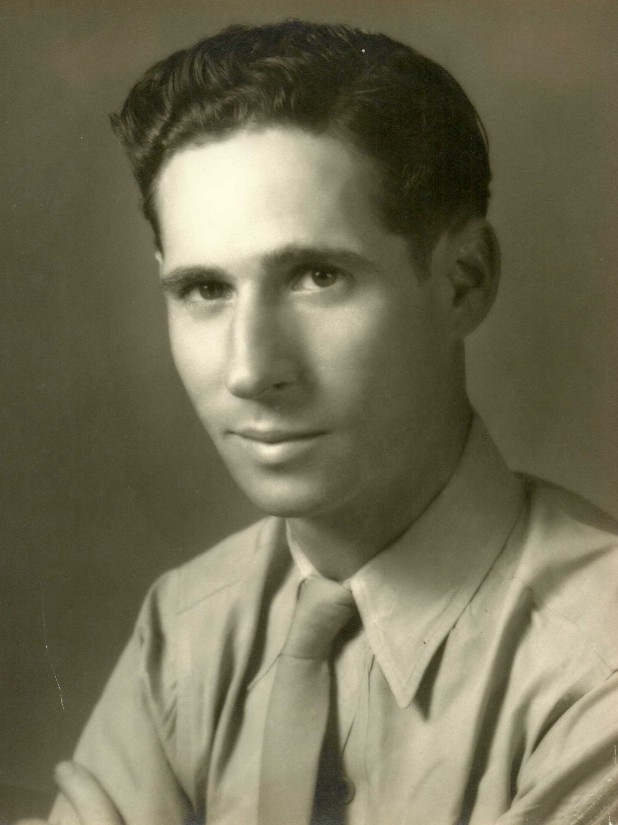
- Unit: 6th Supply Depot, Oahu, 4th Defense Battalion
- Date of Birth: November 10, 1919
- Entered the Military: February 16, 1939
- Date of Death: March 21, 2014
- Hometown: Cleveland, Ohio
- Place of Death: Cleveland, Ohio
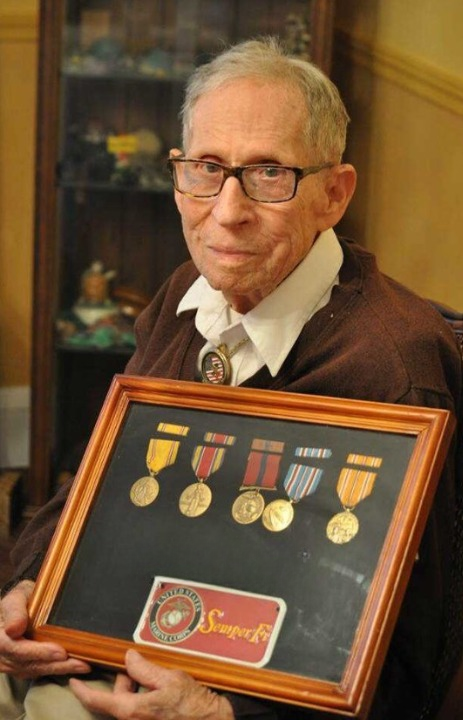
- Award(s): American Defense Service Medal, World War II Victory Medal, Good Conduct Medal, American Campaign Medal, Asiatic-Pacific Campaign
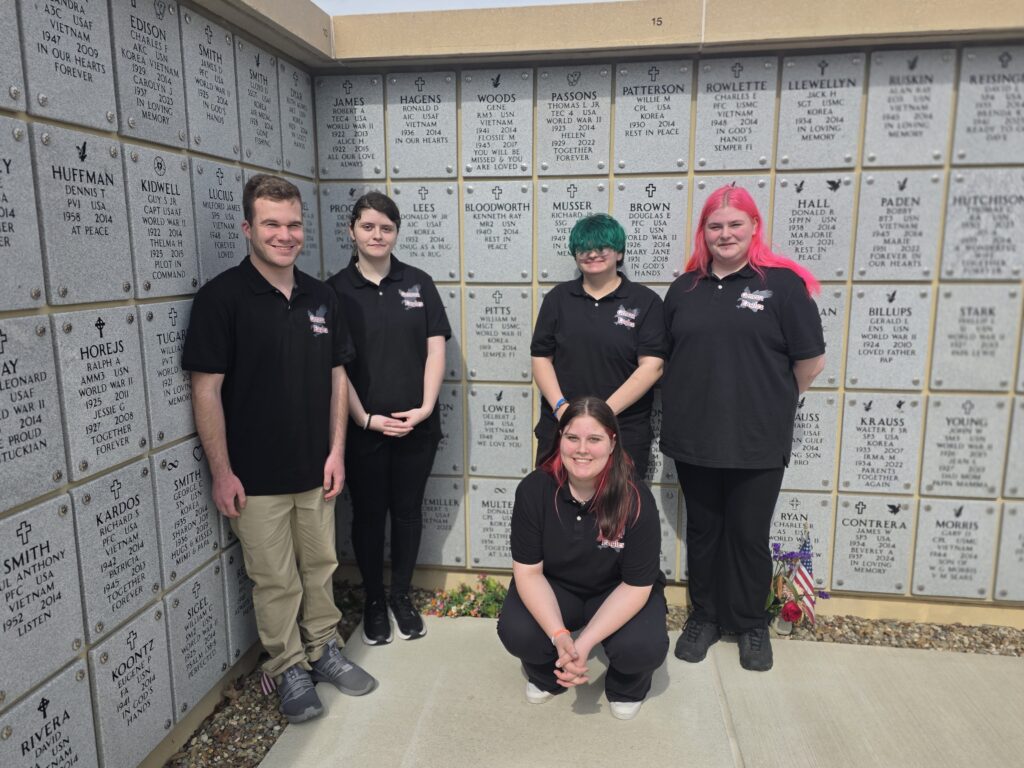
- Cemetery: Section WAL68, row C, site 13, Ohio Western Reserve National Cemetery, Seville, Ohio. Knollwood Cemetery, Mayfield Heights, Cuyahoga County, Ohio, USA
Mentored by Mrs. Brenda Unsinger
Geneva High School, Geneva, Ohio
2025/2026
Early Life
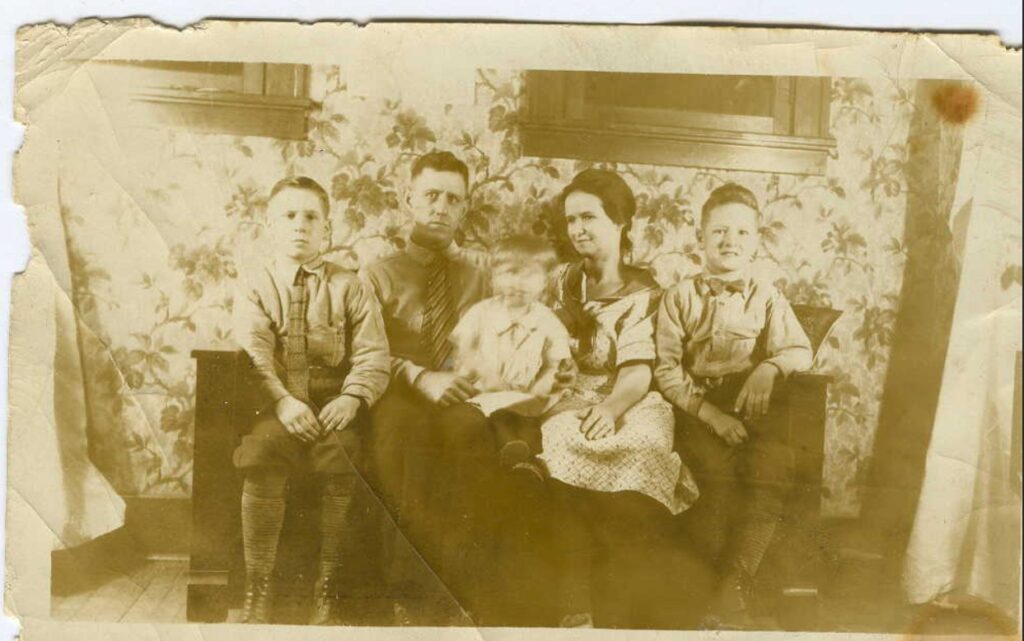
William Milton Pitts was born on November 10, 1919, in Big Sandy, Tennessee, to William Pitts and Enola Still. He was one of six children, growing up alongside his siblings, John Nelson, Phyllis, Elizabeth, Paul, and James.
During his childhood, his family moved several times. In 1920, the family was living in Big Sandy, Tennessee. His father, William, worked in the timber industry. By 1930, the family relocated to Hancock, West Virginia, where his father, William, worked as a locomotive fireman. And in 1940, members of the Pitts family lived in Cleveland, Ohio. By this time, his father, William, was not working, and his younger brother, John, worked as a truck driver to support the family.
Like many young people who came of age during the hardships of the Great Depression, Pitts left school after completing the ninth grade. After his family moved to Cleveland while he was in his mid-teens, he joined the Civilian Conservation Corps in Xenia, Ohio. When he was 17, he moved to California to live with an uncle while searching for work.

Homefront
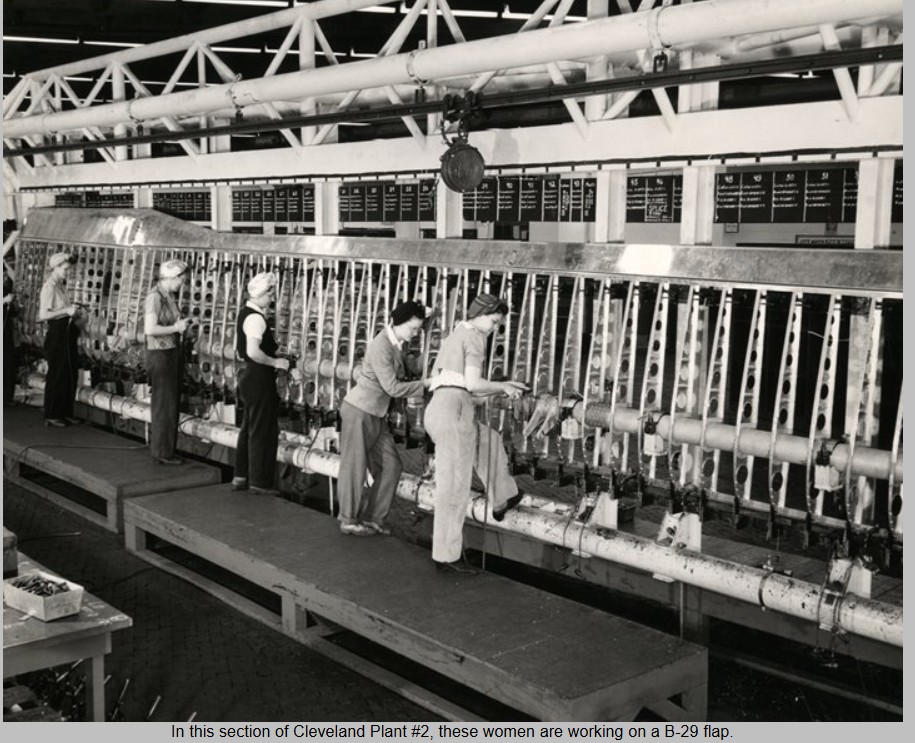
While Pitts served in the United States Marine Corps during World War II, his parents and siblings were living in Cleveland. Like many American cities, Cleveland experienced significant changes during the war as industries shifted their production to support the military. Cleveland was already an important manufacturing center, but wartime demand spurred rapid factory expansion. Local factories, like Fisher Body, shifted from producing automobiles to producing B-29 bombers for the United States military.
The growth of wartime industry led to a surge in employment. By September 1944, employment in Cleveland had risen about 34 percent above its 1940 level. Much of this increase occurred in manufacturing, where the number of workers grew from about 191,000 to more than 340,000. Both men and women contributed to the wartime effort. Many women entered factory jobs for the first time, filling positions left open by men serving in the military.
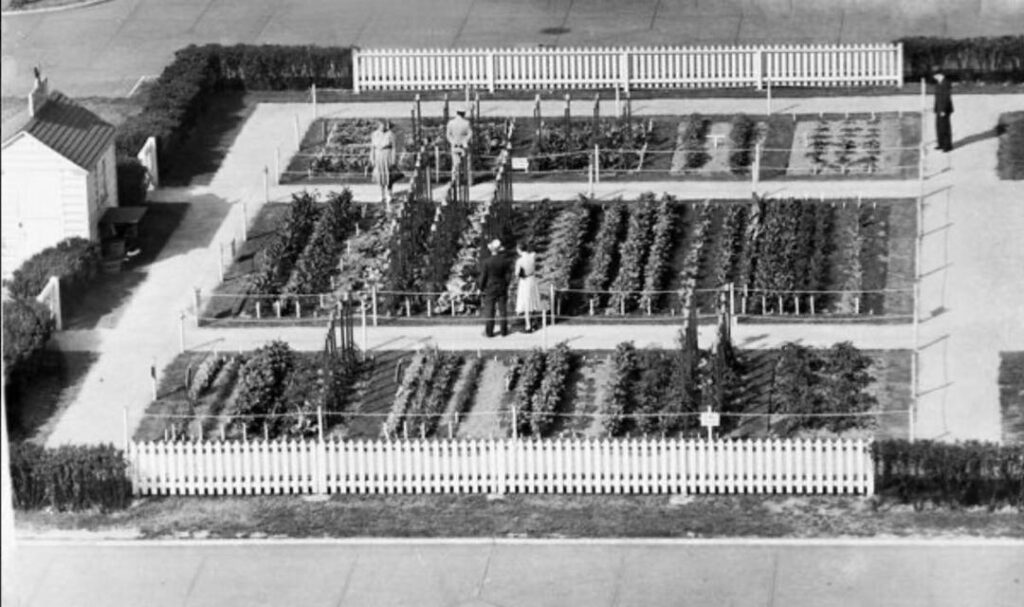
Cleveland residents also supported the war through a variety of home front activities. Families and school children planted Victory Gardens to grow vegetables and reduce pressure on the national food supply. A large Victory Garden was planted on the Mall in downtown Cleveland. Citizens also participated in war bond drives and scrap metal collections to support military production. The War Service Center, located on Public Square, became a hub for wartime activities in the city. Built with donated materials and labor, the center housed recruiting offices, Red Cross services, war bond sellers, and support agencies such as the USO.
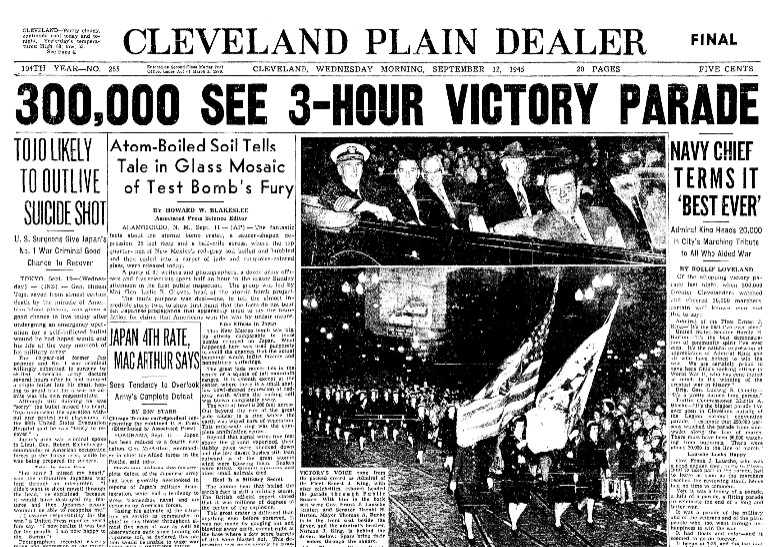
When the war finally ended in 1945, Cleveland celebrated with enormous enthusiasm. City leaders expected about 20,000 people to attend the V-J Day celebration marking Japan’s surrender, but nearly 300,000 people filled the streets of downtown Cleveland. The large turnout demonstrated how deeply the war had affected the city and the many families whose loved ones fought overseas.
Military Experience
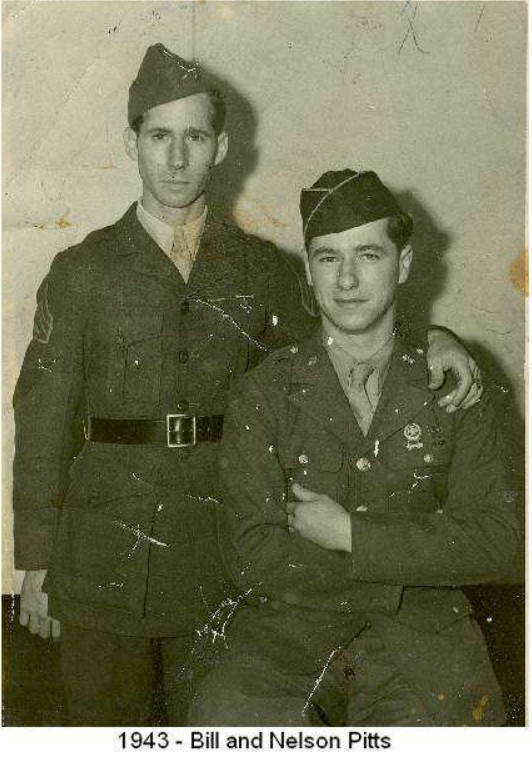
Pitts enlisted in the United States Marine Corps in 1939 in San Francisco. His decision to join the Marines was almost accidental. One day, while walking near a government building, he became curious and went inside to explore. When he reached the basement, Pitts discovered the military recruiting offices. Although he initially started to leave, he suddenly changed his mind and enlisted.
After enlisting, Pitts went to boot camp in San Diego. He described the experience as “hell.” In 1940, Pitts was transported to Pearl Harbor. At the time of the Japanese attack on Pearl Harbor, he was serving as a Marine sergeant working in the supply department and living in the Marine Barracks near the naval base.
On the morning of December 7, 1941, Pitts was awakened by a friend known as “Slats,” who told him that the Japanese were attacking Pearl Harbor. Pitts quickly dressed and rode with him to the main gate of the base. At first, Pitts believed he was witnessing a routine training exercise or “dogfight” as he watched planes flying over Hickam Field and Pearl Harbor. However, he soon noticed the rising sun symbol on the aircraft’s wings and realized they were Japanese planes. Moments later, he heard a massive explosion—the destruction of USS Arizona—and understood that the United States was under attack.
As the attack continued, Pitts joined other Marines watching enemy planes fly so low overhead that they could see the pilots’ goggles. After the attack ended, a first sergeant asked if anyone could drive a ten-ton truck. Pitts volunteered and was ordered to drive to the Lulualei Ammunition Depot to pick up supplies for the Marines stationed at the barracks. There he met Sergeant Ted Roosvali, who helped load the ammunition. Pitts then drove the truck back to Pearl Harbor under blackout conditions, using only parking lights to avoid being seen by enemy aircraft. He safely delivered the ammunition needed to defend the base.
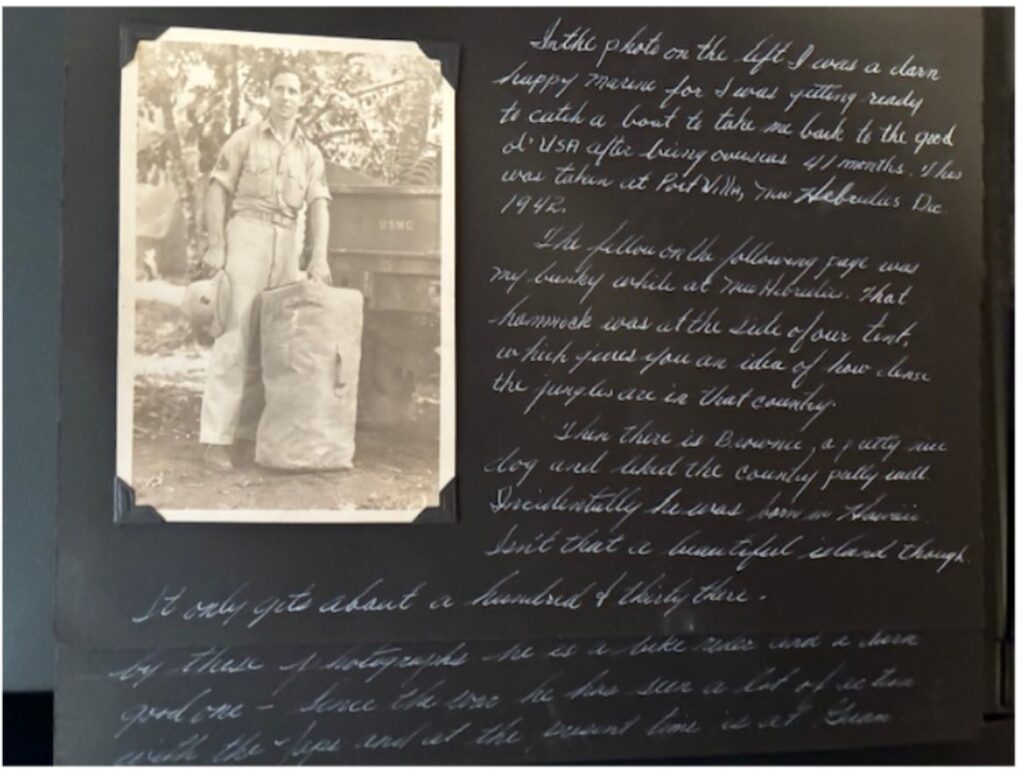
Throughout the war, Pitts continued serving in logistics and supply roles that were essential to the Marine Corps’ operations. In 1942, he was stationed in the New Hebrides with the 4th Defense Battalion and later served with the 6th Supply Depot on Oahu in 1945. His work as a quartermaster ensured that Marines received the equipment and supplies they needed to carry out their missions.
Pitts remained in Hawaii after World War II as a Commissioned Warrant Officer. He returned to Camp Lejeune, North Carolina, where he was stationed at the outset of the Korean War. He also served at the Marine Barracks in Washington, D.C., and Camp Pendleton. During this time, he attained the rank of master sergeant and was the third Marine to ever earn the E8 pay grade. He also placed third in a nationwide Marine Corps Instructor contest.
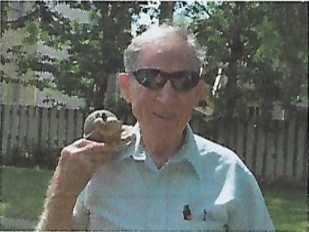
After 20 years in the Marine Corps, Pitts was undecided if he wanted to re-enlist. He asked a friend for advice on whether to stay with the career he knew or return to Cleveland to pursue a college education. His friend told him a story about a turtle that, to get from place to place, needs to stick its neck out and take a risk. Pitts retired from the Marine Corps in 1959. When he returned home, he opened a gift from his friend. It was a wooden turtle with a tag that said, “Never forget.”
Veteran Experience
While he was still in the Marine Corps, Pitts married Dorothy Wilick in 1943. Together, they had a daughter, Honora. After completing his career in the Marine Corps in 1959, Pitts returned to the Cleveland area and began preparing for a new career devoted to helping others. Determined to continue serving his community, he pursued higher education at Cleveland College, which later became Case Western Reserve University. He earned his master’s degree in speech pathology in 1965. In 1968, Pitts remarried Geraldine (Geri) Barbosky. They had three children, John, Robert, and Adrianne.
Following his graduation from Cleveland College, Pitts accepted a position at Highland View Hospital. There, he became the director of the Speech and Language Department. In this role, he worked closely with patients recovering from strokes, helping them regain speech, communication abilities, and confidence after life-changing medical events. He also worked with children with dyslexia, helping them develop the skills necessary for academic success. Through his work in speech and language therapy, Pitts improved the quality of life for many patients and their families. After 20 years of service at Highland View Hospital, he retired in 1986.
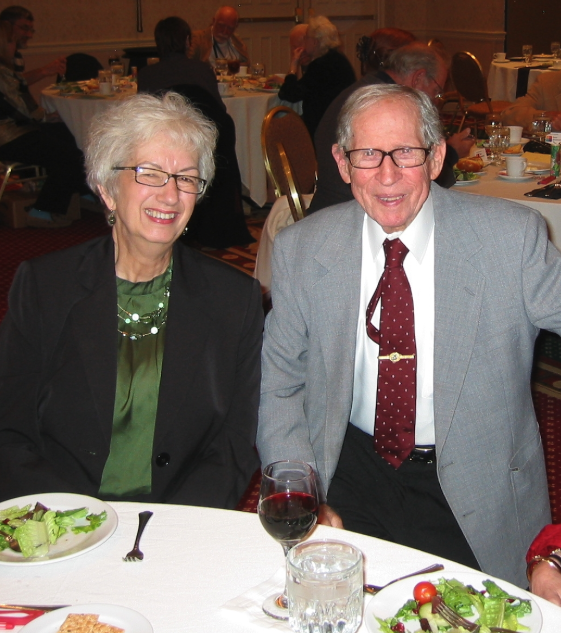
While working with stroke survivors, Pitts realized that many patients attended therapy sessions not only for rehabilitation but also for the emotional support and social connections they developed with other survivors and caregivers. Recognizing the importance of this support, Pitts founded the Cleveland Stroke Club in 1974. The organization was created to provide fellowship, education, and advocacy for stroke survivors and their families.
The first meetings of the Cleveland Stroke Club were held at Highland View Hospital, but members soon requested a meeting place outside of a hospital setting. Eventually, the group moved its meetings to Euclid Avenue Christian Church, where members could gather in a more welcoming and comfortable environment. Pitts worked tirelessly to build the organization and ensure it addressed the needs of both survivors and caregivers. Monthly meetings included dinners, guest speakers who discussed health and recovery topics, and opportunities for members to socialize. With his wife, Geri, Pitts often prepared meals for dozens of members each month.
Recognizing that caregivers also needed support, Pitts helped establish caregiver meetings where family members could share experiences, receive encouragement, and learn from others facing similar challenges. Through his leadership, compassion, and determination, the Cleveland Stroke Club grew into an important support network for stroke survivors and their families throughout the Cleveland area.


Commemoration
Master Sergeant William Milton Pitts passed away on March 21, 2014, at the age of 94. He was interred at the Ohio Western Reserve National Cemetery. His legacy lives on through the many lives he touched as a Marine, healthcare professional, and community leader. His most lasting legacy is in founding the Cleveland Stroke Club in 1974.
Pitts often reminded others that success requires courage and determination. He believed that a person’s beginnings do not determine their future. He encouraged people to think about the turtle and not be afraid to “stick their necks out” to achieve their goals, because that is the only way a turtle moves forward.

Bibliography
Primary Sources
“C.I.O. Women Open Campaign to Sell Bonds.” Cleveland Plain Dealer [Cleveland, Ohio], February 6, 1942, https://cleveland.newsbank.com/doc/image/v2:122AFBBA107AC9E4@NGPA-OHPD-126C655ED4077CB4@2430397-1267C017629BE520@11-1267C017629BE520@
“Cleveland’s Victory Parade of 20,000 Set for Sept. 11.” Image. Cleveland Plain Dealer [Cleveland, Ohio], September 12, 1945. Newspapers.com (1059575479)
Enola Still. Pennsylvania, U.S., County Marriage Records, 1852-1968. Digital Images. https://ancestry.com.
Hawaii. Honolulu County. 1940 U.S. Census. Digital Images. http://ancestry.com.
In this section of Cleveland Plant #2, these women are working on a B-29 flap. Photograph. The American Automobile Industry in World War Two. https://usautoindustryworldwartwo.com/Fisher%20Body/fisherbodyclevelandplant2.htm.
Loveland, Roelif. “300,000 See 3-Hour Victory Parade: Naval Chief Terms It ‘Best Ever.’” Cleveland Plain Dealer [Cleveland, Ohio], September 12, 1945. https://cleveland.newsbank.com/doc/image/v2:122AFBBA107AC9E4@NGPA-OHPD-126DB0781B12A8F9@2431711-1268B070056DB292@0-1268B070056DB292@.
Overhead View of Mall Victory Garden. Photograph. July 6, 1944. Michael Schwartz Library Special Collections at Cleveland State University, Cleveland Historical. https://clevelandhistorical.org/items/show/988.
“Photos from Before 2010.” Cleveland Stroke Club. Accessed Jan. 19, 2026. https://clevelandstrokeclub.org/.
Pitts Family records. 1940-2014. Courtesy of Geraldine Pitts.
Pitts, William. “William Milton Pitts Collection.” Interview by Thomas A. Swope. Veterans History Project, American Folklife Center, Library of Congress. https://www.loc.gov/item/afc2001001.86984/.
Tennessee. Henry County. 1920 U.S. Census. Digital Images. http://ancestry.com.
West Virginia. Hancock County. 1930 U.S. Census. Digital Images. http://ancestry.com.
William M. Pitts. Ohio Department of Health; Columbus, OH, USA; Ohio Divorce Index, 1962-1963, 1967-1971, and 1973-2007. Digital Images. https://ancestry.com.
William M. Pitts. U.S., Marine Corps Muster Rolls, 1798-1958. Digital Images. https://ancestry.com.
Wilson, Helen Grant. “Good Victory Garden Ranks With Munitions Factory as Producer of War Materials.” Cleveland Plain Dealer [Cleveland, Ohio], April 25, 1943. https://cleveland.newsbank.com/doc/image/v2:122AFBBA107AC9E4@NGPA-OHPD-127044E2CDD691D4@2430840-1267BFE413E49064@27-1267BFE413E49064@.
Wilson, Helen Grant. “Mall Victory Garden Gets Set for Spring.” Cleveland Plain Dealer [Cleveland, Ohio], October 22, 1943. https://cleveland.newsbank.com/doc/image/v2:122AFBBA107AC9E4@NGPA-OHPD-126C682DD4C31E17@2431020-1267BFD34C2EAFD0@10-1267BFD34C2EAFD0.
Secondary Sources
Albrecht, Brian. “Marine veteran recalls how Japanese pilots grinned as they attacked Pearl Harbor (video).” The Plain Dealer [Cleveland, Ohio], December 7, 2011. https://www.cleveland.com/metro/2011/12/marine_veteran_recalls_how_jap.html.
Jarosz, Tyler. “Mall Victory Garden.” Cleveland Historical. Accessed November 8, 2025. https://clevelandhistorical.org/items/show/988.
Lawless, Annette. “Local Marine Remembers Pearl Harbor Attacks after 70 Years,” posted December 12, 2011, YouTube, 1:48, https://youtu.be/QHrKvVE7v4k?si=aLAr-TdURMTppoZr.
Rice, Karin Connelly. “Gardening Victories: From War Gardens to Community Gardens, Clevelanders have Green Thumbs.” Freshwater Cleveland. May 25, 2023. https://www.freshwatercleveland.com/breaking-ground/Victory_Gardens_052523.aspx.
“The Roots of the Cleveland Stroke Club.” Cleveland Stroke Club. Accessed Jan. 19, 2026. https://clevelandstrokeclub.org/club-history/.
“William Milton Pitts.” Find a Grave. Accessed November 1, 2025. https://www.findagrave.com/memorial/133639325/william-milton-pitts.
“William Milton Pitts.” Veterans Legacy Memorial, National Cemetery Administration. Accessed May 15, 2026. https://www.vlm.cem.va.gov/WILLIAMMILTONPITTS/A551846.
“World War II.” Case Western Reserve University. Accessed November 11, 2025. https://case.edu/ech/articles/w/world-war-ii.
This profile was funded by a grant from the United States Department of Veterans Affairs. The opinions, findings, and conclusions stated herein are those of the author and do not necessarily reflect those of the United States Department of Veterans Affairs.